| ชื่อแบรนด์: | JEFFER |
| หมายเลขรุ่น: | ปรับแต่ง |
| MOQ: | 1 ชุด |
| ราคา: | โปร่ง |
| เวลาจัดส่ง: | 90 วันหลังจากได้รับเงินดาวน์ |
| เงื่อนไขการชำระเงิน: | ที/ที,แอล/C |
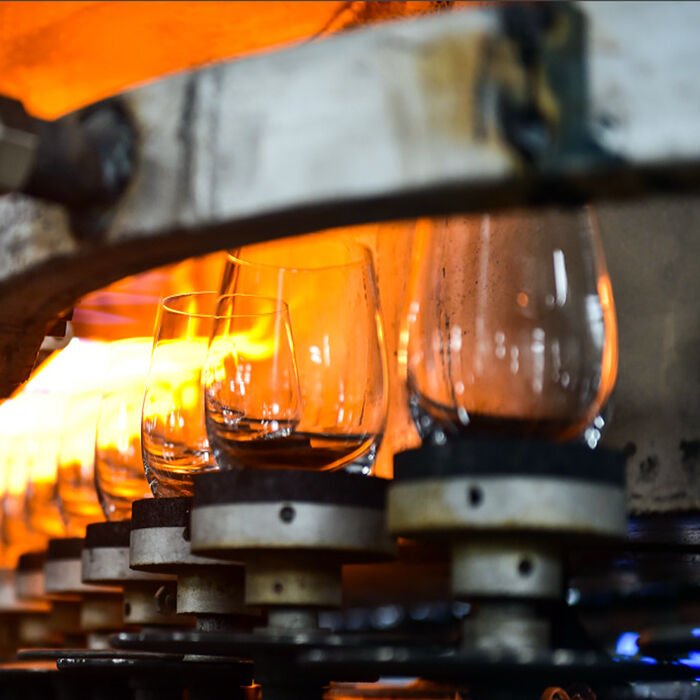
Tableware glass encompasses a broad range of dining and serving vessels manufactured from glass materials, including goblets, plates, drinking glasses, bowls, mugs, and other household essentials. These products are produced using various material compositions such as soda-lime glass, lead crystal, borosilicate glass, and opal glass, each offering distinct properties for different applications.
A key attribute of tableware glass is its excellent transparency, which allows users to clearly view the contents, thereby enriching the dining and serving experience. Glass tableware also demonstrates favorable thermal resistance, making it suitable for both hot and cold food service. Furthermore, it is easy to clean, hygienic, and importantly, reusable, which significantly reduces single-use waste and supports environmental sustainability.
The product range within the tableware glass category is extensive and versatile, serving not only everyday food and beverage service but also interior decoration and gift-giving purposes. From casual family meals to formal dining settings, glass tableware maintains its popularity across global markets.
The 60TPD configuration represents an ideal mid-scale capacity, perfectly suited for manufacturers targeting regional markets with balanced capital investment and operational efficiency. This production scale enables steady output while maintaining manageable operational complexity, making it an excellent entry point for new glass manufacturers or capacity expansion for established producers.
| No. | Product Type |
|---|---|
| 1 | Glass Tumbler |
| 2 | Glass Cup |
| 3 | Glass Bowl |
| 4 | Glass Dish / Plate |
| 5 | Stemware / Wine Glass (Clear Goblet) |
| 6 | Decorative Furnishing Glass |
The production line is specifically optimized for clear goblet manufacturing, with mold design and forming parameters fine-tuned to achieve the crystal-clear transparency and thin-wall uniformity required for premium stemware. The same line can be reconfigured with alternative molds to produce other tableware items as market demand shifts.
The 60TPD production line delivers multiple performance benefits that set it apart from conventional glass forming systems.
The process significantly enhances the mechanical strength and thermal shock resistance of finished glass products, ensuring durability and reliability during daily usage and cleaning cycles. This is achieved through precise annealing control and optimized forming parameters that minimize internal stress.
The line supports a wide range of decorative surface finishing techniques, allowing manufacturers to produce glassware with varied aesthetic appearances, from polished and frosted to patterned and tinted finishes. This flexibility enables product differentiation and premium pricing in competitive markets.
The fully automatic operation minimizes manual intervention, reduces labor costs, and ensures consistent product quality across high-volume production runs. Advanced PLC control systems monitor and adjust key parameters in real time, maintaining tight tolerances throughout the production cycle.
Specifically engineered for clear goblet manufacturing, the line incorporates precision gob feeding and specialized mold cooling systems to achieve superior clarity and dimensional accuracy. The result is a premium product with excellent optical properties and consistent wall thickness.
To manufacture premium quality tableware glass, the following primary raw materials are essential.
Main Batch Materials
| No. | Raw Material |
|---|---|
| 1 | Silica Sand |
| 2 | Soda Ash |
| 3 | Calcite |
| 4 | Limestone |
Auxiliary Materials
| No. | Auxiliary Material |
|---|---|
| 1 | Feldspar |
| 2 | Boric Acid |
| 3 | Barium Carbonate |
These raw materials are carefully proportioned and blended to achieve the desired chemical composition, melting behavior, and final product properties. The selection and quality of raw materials directly influence the clarity, color, strength, and workability of the glass. For clear goblet production, high-purity silica sand and carefully controlled iron oxide content are critical to achieving optimal transparency.
The glass melting process consists of four distinct physicochemical stages, each critical to achieving high-quality molten glass ready for forming.
Stage 1: Silicate Formation
As the batch materials are heated, solid-phase reactions occur among the raw material components. Gaseous by-products are released, and the mixture transforms into an opaque sintered mass composed primarily of silicates and unreacted silica.
Stage 2: Glass Melt Formation
With continued heating, the sinter gradually liquefies. The silicates and residual silica dissolve into a molten glass phase. At this point, the melt contains numerous bubbles and exhibits uneven chemical composition and physical properties.
Stage 3: Fining and Bubble Removal
The glass melt undergoes further heating, which reduces its viscosity and promotes the ascent and release of gas bubbles. This fining process effectively eliminates visible bubbles from the molten glass pool, resulting in a clearer and more homogenous melt. For clear goblet production, thorough fining is essential to achieve the optical clarity required for premium tableware.
Stage 4: Homogenization
The melt is maintained at an elevated temperature for a sufficient duration to allow molecular diffusion, which eliminates compositional striae and achieves uniform chemical distribution throughout the glass. It is worth noting that the homogenization temperature is typically lower than that used during fining to prevent re-bubble formation while still enabling thorough mixing.
This unit delivers precisely cut glass gobs to the forming machine. The shear angle is adjustable between RH30° and LH90°, and the feeder is compatible with S.G., D.G., and T.G. glass types. The servo-driven system ensures accurate gob weight and consistent delivery timing for high-quality forming. For goblet production, precise gob weight control is essential to achieve uniform wall thickness and consistent product weight.
The press machine is a specialized industrial unit used to form glassware through hydraulic or pneumatic pressing. It is a core component of the glass forming section. The machine typically features 8 to 24 workstations with single, double, or triple punch head configurations. This equipment integrates mechanical, electrical, mold, and automation control technologies, delivering high precision, production efficiency, and operational flexibility for manufacturing containers, tableware, and decorative glass items.
The transfer mechanism rapidly and steadily conveys formed glass products from the press machine or I.S. machine to the cross conveyor positioned upstream of the annealing lehr. This equipment is specifically engineered for high-speed production lines, ensuring smooth product handling without damage.
Installed directly in front of the annealing lehr, the cross conveyor receives glass products from the transfer mechanism. It works in coordination with the stacker to properly align and feed products into the annealing lehr for thermal treatment.
The stacker is responsible for pushing glass products from the cross conveyor into the annealing lehr. Pushing speed is regulated through an inverter drive, while digital counters monitor and control the number of pushing actions, ensuring precise and consistent loading.
The annealing lehr is a continuous thermal treatment furnace designed to slowly cool glass products, relieving internal stresses that develop during forming. This equipment is suitable for tableware, bottles, jars, and other glass items, ensuring finished products meet mechanical strength and thermal stability standards. For goblets, proper annealing is particularly critical due to the thin wall sections and complex stem geometry.
A variety of packing machines and systems are available to accommodate different packaging styles and requirements, including manual, semi-automatic, and fully automatic solutions tailored to various types of glassware products. Packaging options include individual wrapping, nested stacking, and carton packing for retail or bulk distribution.
Q1: What production capacities are available for tableware glass lines?
A: The 60TPD line is one of JEFFER's standard offerings, ideally suited for medium-scale operations targeting regional or export markets. We also offer capacities from 30 TPD to 150 TPD. The 60TPD configuration typically produces approximately 18,000 to 22,000 goblets per day, depending on product weight and cycle time. This capacity provides an optimal balance between investment cost and production efficiency, making it a popular choice among mid-sized manufacturers.
Q2: What is the typical timeline from order to commissioning?
A: The project timeline generally spans 10 to 14 months, covering detailed engineering design, equipment manufacturing, shipping, on-site installation, commissioning, and trial runs. JEFFER provides dedicated project managers to monitor progress and ensure timely delivery at each milestone. The schedule can be accelerated for urgent projects with prior coordination.
Q3: Does JEFFER provide training for local operators?
A: Yes. JEFFER offers comprehensive training programs for client operators and maintenance technicians, both at our partner factories in China and on-site at the client's facility. Training covers equipment operation, routine maintenance, troubleshooting, and quality control procedures, ensuring the client team is fully capable of running the line independently. The training duration is typically 4 to 6 weeks, customized to the client's prior experience level.
Q4: What after-sales support is available?
A: JEFFER provides a standard one-year warranty period following commissioning. During this period, our engineers are available for remote technical support and on-site visits if needed. We also maintain a ready stock of spare parts and can dispatch engineers overseas for emergency repairs or scheduled maintenance services. Long-term technical consultation and spare parts supply agreements are also available.